Outback at Isa is Mount Isa’s Visitor Information Centre, located on Marian Street in north-west Queensland. It serves as a one-stop shop for traveller and tourist information and is home to Mount Isa's top attraction, The Hard Times Mine Tour. The Centre also hosts the Riversleigh Fossil Centre and Laboratory and The Isa Experience, a fascinating exhibit about the city’s history. Additionally, Indigenous Bush Tucker, painting, and Nulla-Nulla (fighting stick) and clap stick-making experiences are offered, along with a Café.
Summary
Outback at Isa staff engaged with the three self-assessment audits:
- Whole of Venue Self-Assessment Audit Checklist
- Hospitality Venue Self-Assessment Audit Checklist
- Tourist of Event Destination Self-Assessment Audit Checklist
Findings
Staff reported that the checklists were thorough and comprehensive, though noted that there was no “No” option, only “N/A
Meeting the Standard
No adjustments are required in these areas, as they meet accessibility standards for blind and low vision visitors:
- Handrails
- Seating areas
- Signage provides simple, brief wording
- Service counter
- Ramps
Provided are five examples facilities which Meet the Standard.
 Tactile markers indicating a ramp and railings with rounded ends
 Markers indicating low head height area under stairs
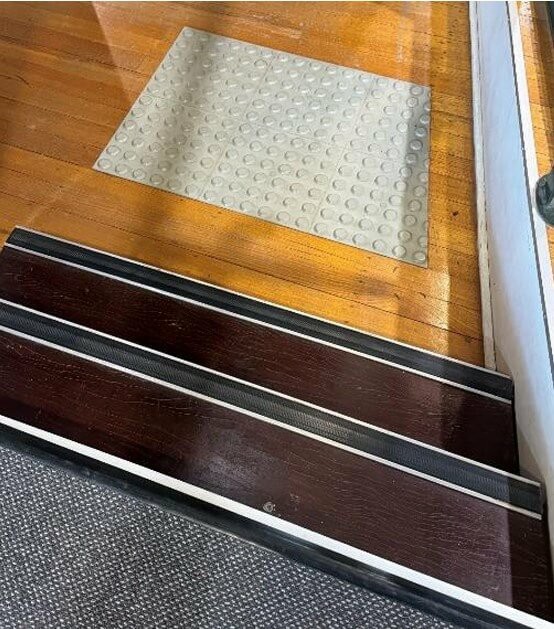 Tactile markers indicating stairs
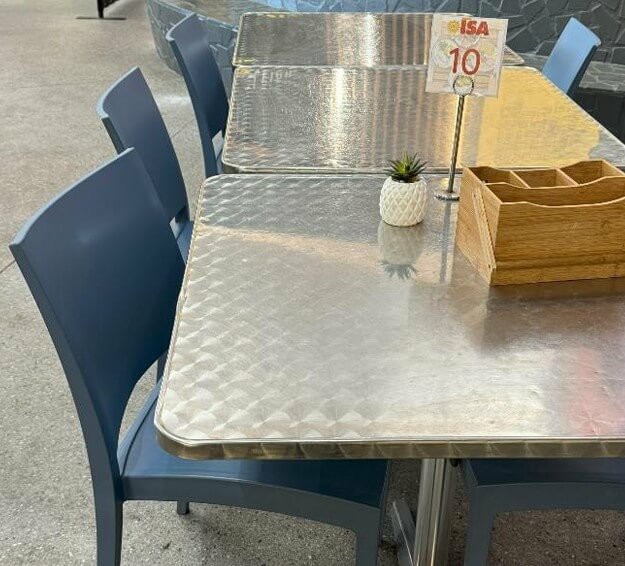 Many tables in the café with rounded corners for safety
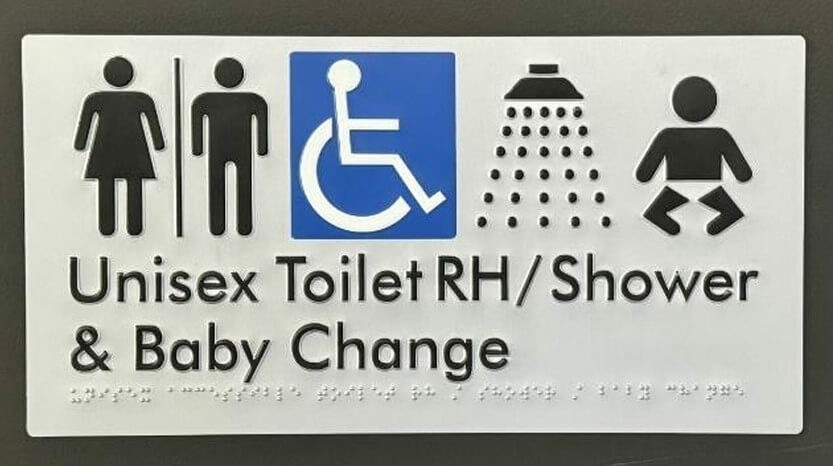 Toilet / shower sign with braille
Opportunities for Improvement
Planned Amendments (Pending)
- Taxi drop off and pick up area
- External walkway surface level, firm, stable, non-slip and anti-glare
- Signage
- Customer service training
- Doorways
Minor Adjustments are Needed
- Emergency exits
- Portable signs not blocking paths
- Tactile direction indicators on large open walkways
- Contrasting entrance door
Medium-Term Adjustments
These adjustments do not require renovations:
- Website accessibility
- Visual information provided in spoken form via push button or QR code
- Tour guides to receive customer service training and use an FM system
Longer-Term Adjustments
Adjustments required during a future renovation:
- Non-glare, non-slip floor surfaces
- More signage with raised characters/symbols
- Tactile buttons and audible instructions on touchscreens
- 3D model or tactile floorplan near the entrance
- Sound-dampening materials in the café
Ongoing Adjustments
- Phone reservations to ask pertinent questions
- Entrance free of tripping hazards
- Adequate lighting in car parks
- Walkways with at least 2metres overhead clearance
- Automatic entrance doors
Below are examples of areas requiring improvement.
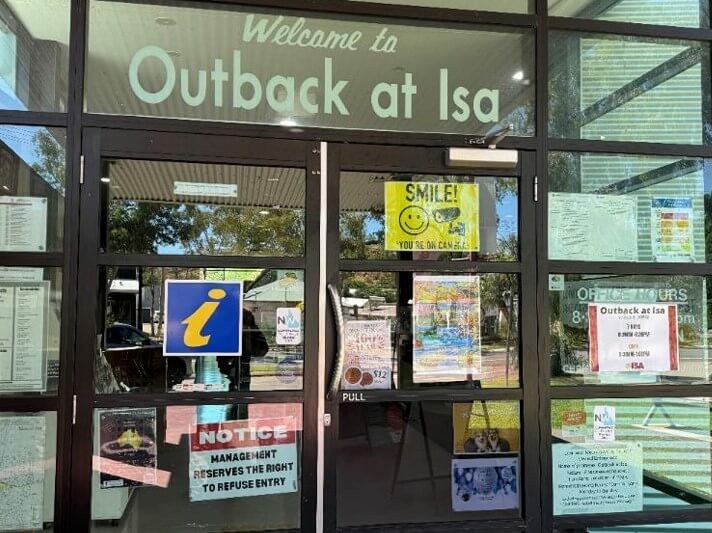 Unclear where the entry way is
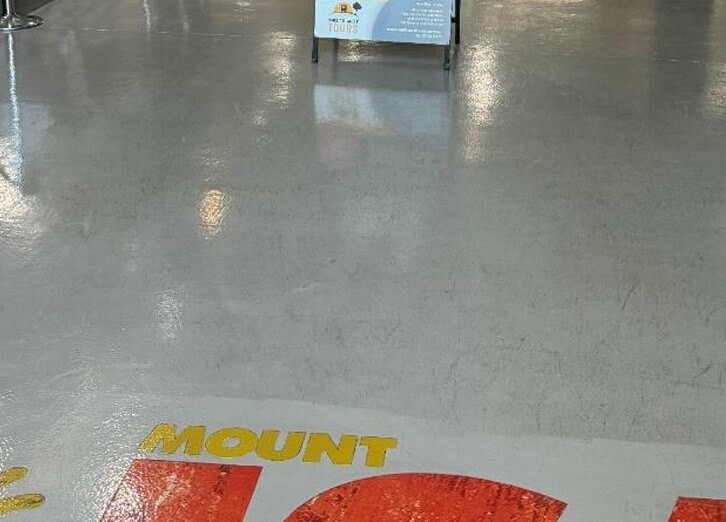 Smooth surface on the floor – tripping hazard if wet
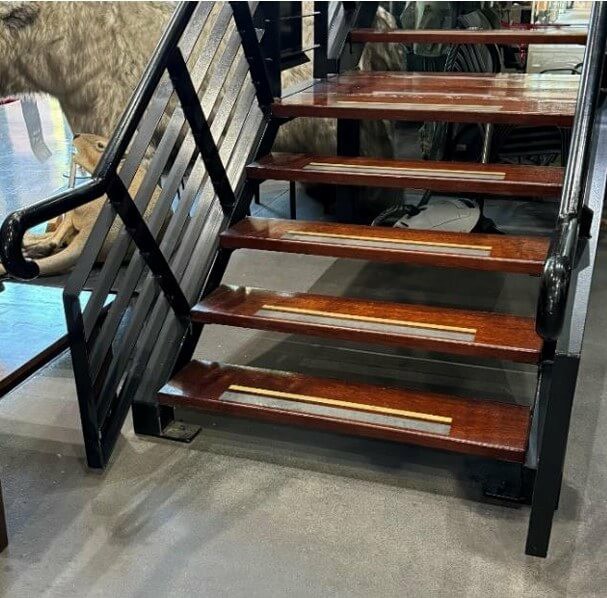 Internal stairs with no tactile markers
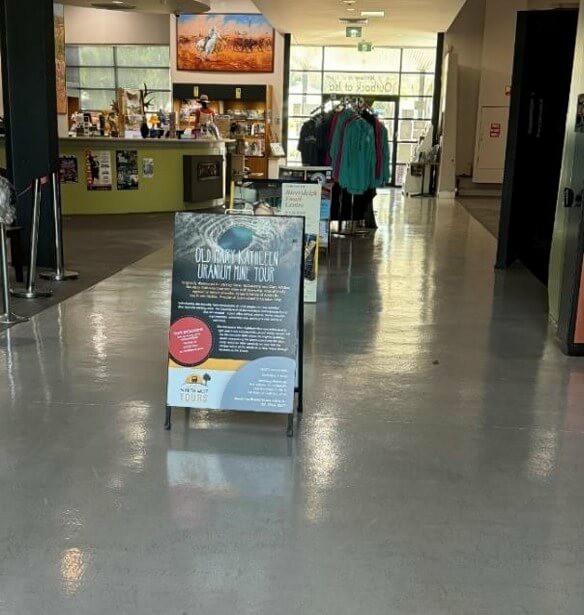 Sandwich boards in middle of walkway
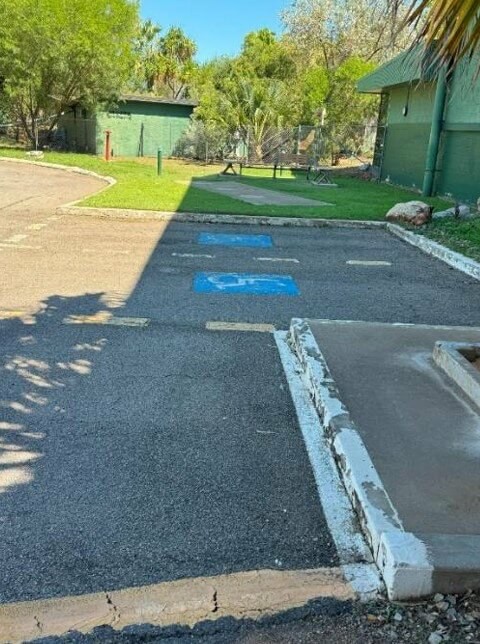 No tactile markings to indicate where the roadway starts, with uneven ground right near the disabled parking.
Outcomes
Following the audit, Outback at Isa plans to take the following steps to improve accessibility for blind or low vision visitors:
- Tactile Maps and Signage: Create tactile maps and signage for key areas, including restrooms, entrances, and points of interest.
- Audio Guides and Tours: Develop audio guides with descriptive narration, available via smartphones or handheld devices.
- Braille Menus and Materials: Offer braille menus and informational materials about Outback at Isa’s offerings.
- Accessible Website: Ensure the website is compatible with screen readers and assistive technologies.
- Staff Training: Provide training to staff on assisting blind and low vision visitors.
Outback at Isa has also requested assistance from Braille House to produce large print/braille ‘twin vision’ café menus and tactile QR code indicators. Management appreciates the Human Guide Training provided by Braille House.
Key Learnings
- Doorways and entrance ways need clearer markings for those with poor vision.
- Car parks and walkways must be smoother, with fewer overhead hazards.
- Staff must be more aware of obstacles that could pose a hazard to low vision visitors.
Conclusion
The self-assessment audits increased staff awareness of issues affecting blind or low vision visitors. Tactile flooring was also recognised as essential for indicating stairs, ramps, or roadways.
Thank you to the Outback at Isa team for this participation, feedback and valuable insights, and CONGRATULATIONS on your commitment to cater for accessibility and inclusion for guests who are blind or have low vision.